A Brief History of Kebab: From Ancient Campfires to Modern Fast-Casual
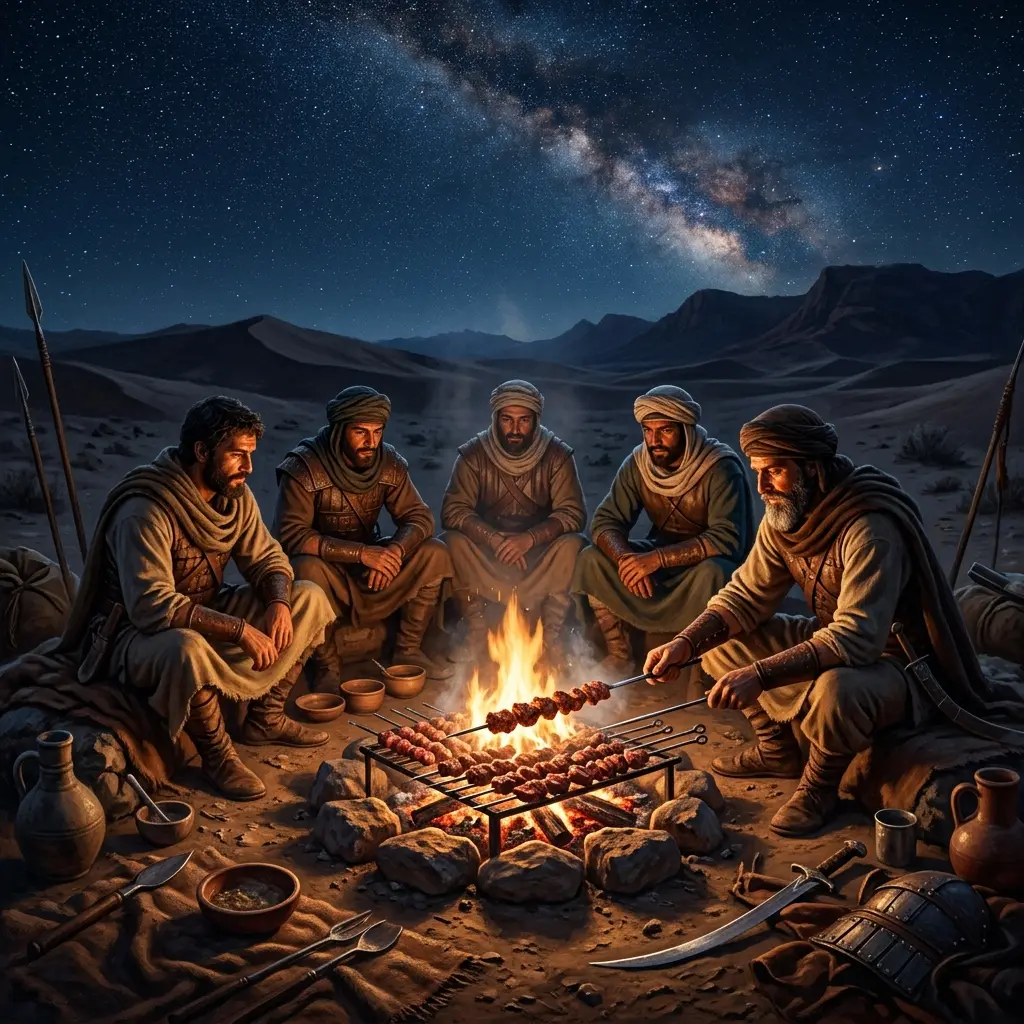

From Nomadic Fire to Modern Plates
The kebab is one of the world's most successful culinary exports. Today, you can find it on almost every continent, from small kiosks to upscale dining rooms. But the journey of the kebab began thousands of years ago in the dry plains of the Middle East.
1. Ancient Roots and Etymology
The word *kebab* originates from the ancient Aramaic and Akkadian word *kababu*, which translates to "to burn" or "to char". Cooking small pieces of meat on spits is an ancient practice born out of necessity. In wood-scarce regions, slicing meat into small pieces allowed it to cook quickly over small fires, conserving precious fuel. Archaeological digs in Greece and Mesopotamia have unearthed stone skewer supports dating back to the Bronze Age.
2. The Legend of the Swords
A famous Middle Eastern legend tells of medieval soldiers on military campaigns who used their combat swords to skewer fresh chunks of meat, grilling them over open campfires. While historians point out that direct fire would damage expensive sword blades, the legend beautifully captures the rustic, outdoor spirit of the dish.
3. The Vertical Spit Revolution
For centuries, kebabs were cooked horizontally over open coals. In the 19th century, Ottoman cooks in Bursa, Turkey, revolutionized the dish by rotating the spit vertically. This invention allowed the melting meat fats to drip down the stack, basting the meat as it spun, keeping it juicy and flavorful. This technique gave birth to the döner kebab, which later evolved into the Greek gyros and the Arab shawarma.
4. The Modern Fast-Casual Era
Today, the kebab has transitioned into the modern F&B landscape. Brands like Kebabjoy are leading the next phase, turning this ancient comfort food into a modern, healthy fast-casual experience with digital ordering, clear pricing, and clean, vibrant restaurants.